Why British Craftsmanship Matters (And Why It's Worth Paying For)
There's a particular kind of tiredness that comes from buying the same bag three times in two years. The strap that stretches then snaps. The corners that scuff within a month. The lining that comes away at the seams just as you've finally broken it in. This is the entirely predictable result of fast fashion, an industry built to move quickly and cheaply, where "new season" often means "not built to survive the season."
Fast fashion bags are largely made from bonded leather, PU, or synthetic blends dressed up to look like the real thing. They're stitched at speed, on production lines optimised for volume rather than durability, and priced to be replaced rather than repaired. The environmental cost is just as steep as the personal one: cheap materials that can't be recycled, production runs that generate excess stock and waste, and a supply chain stretched across the globe long before a single bag reaches a shop shelf.
It's a model built on turnover rather than longevity. New styles arrive weekly, prices stay low enough to feel disposable, and the whole system depends on customers coming back again and again, not because they love what they bought, but because it didn't last. It's easy to see the appeal in the moment, a low price tag feels like a win, but it rarely feels that way twelve months later, once the bag has been replaced twice over and the "saving" has disappeared.
At Honey & Toast, we've built the business the opposite way round.
| Feature | Fast Fashion Bag | Honey & Toast Bag |
|---|---|---|
| Materials | Bonded leather/PU | Full vegetable-tanned leather |
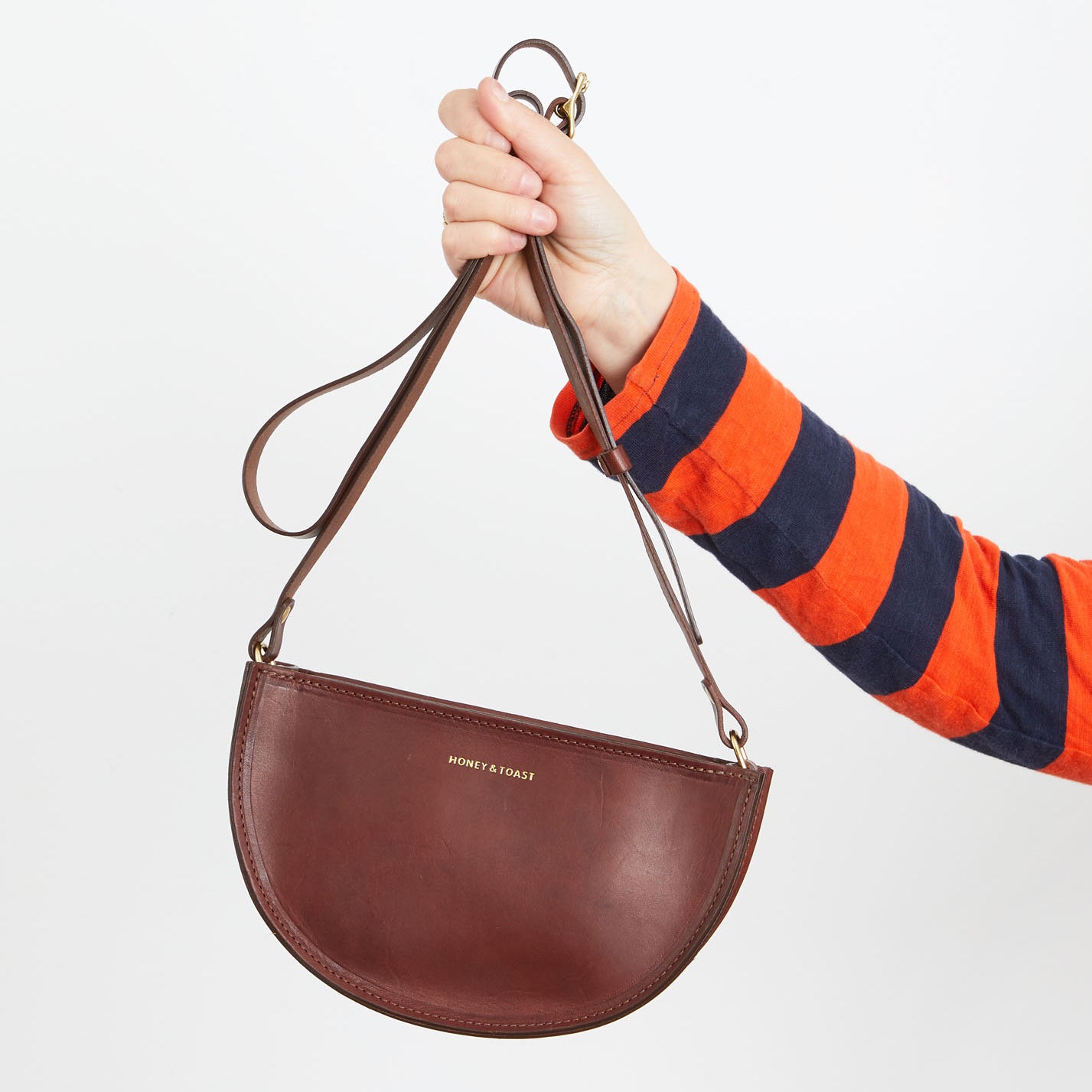
| Construction | Machine-stitched, mass produced | Hand-cut, hand-stitched, Somerset |
| Lifespan | Months | Years, ages with a patina |
| Batch size | Thousands | Small batch |
Made in Somerset, By Hand
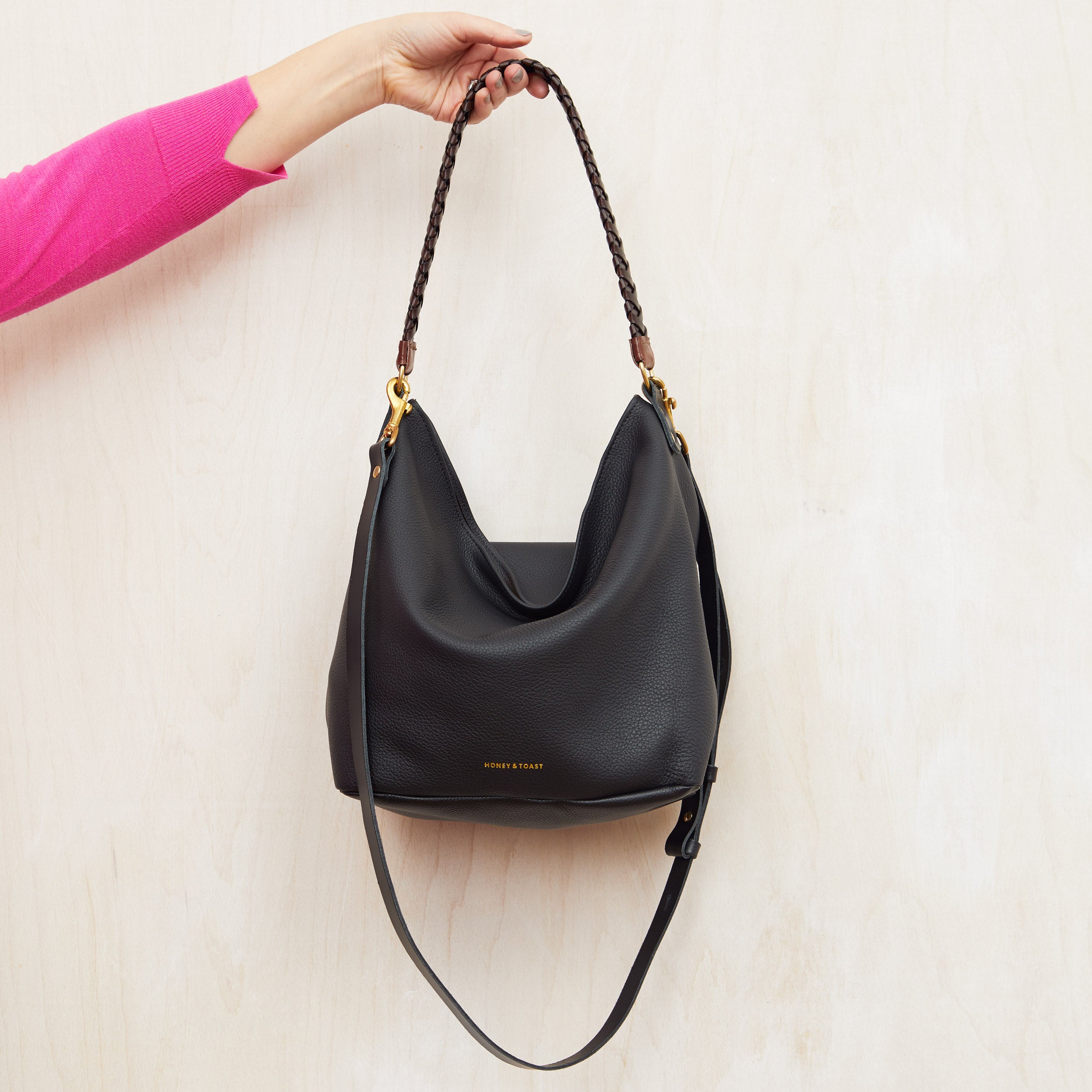
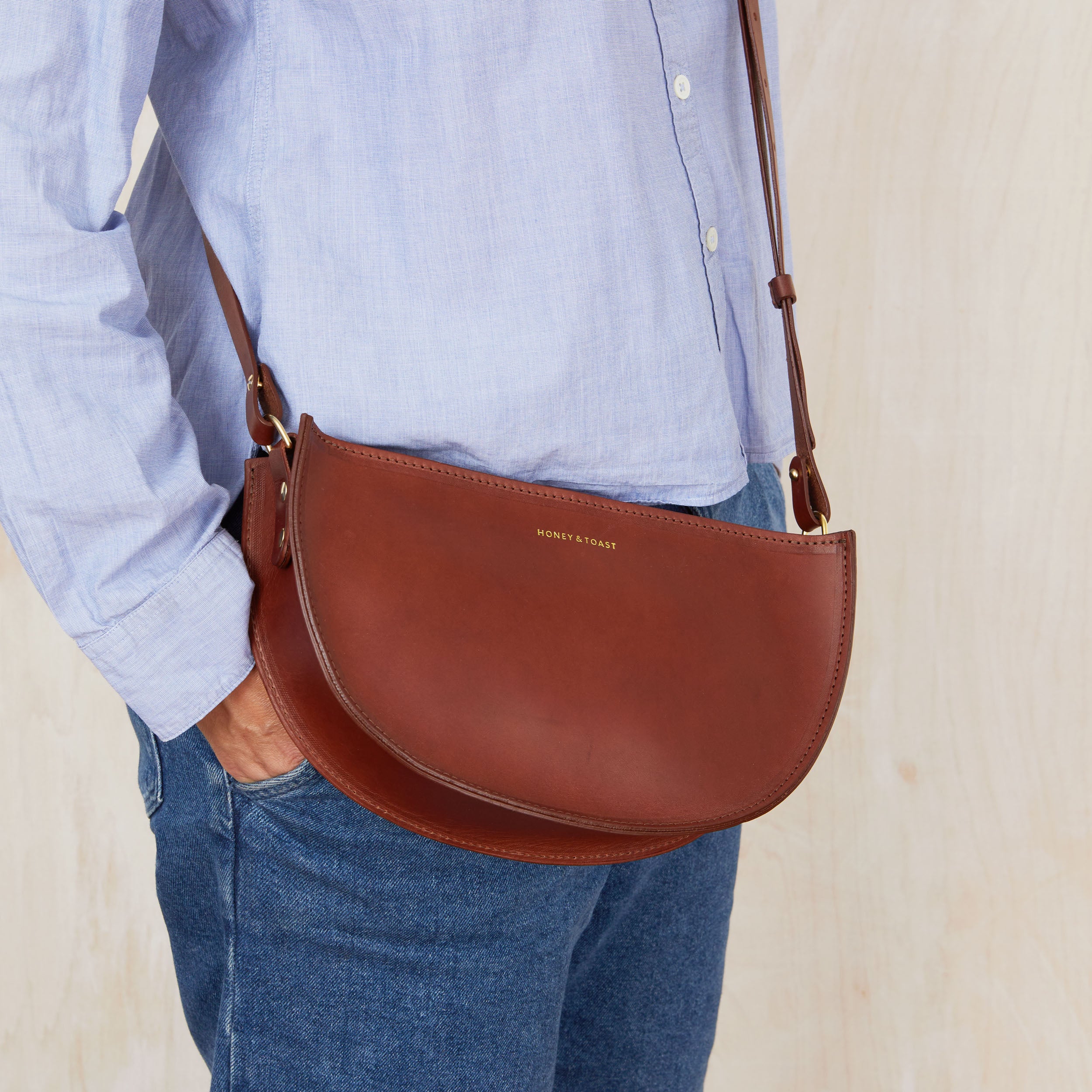
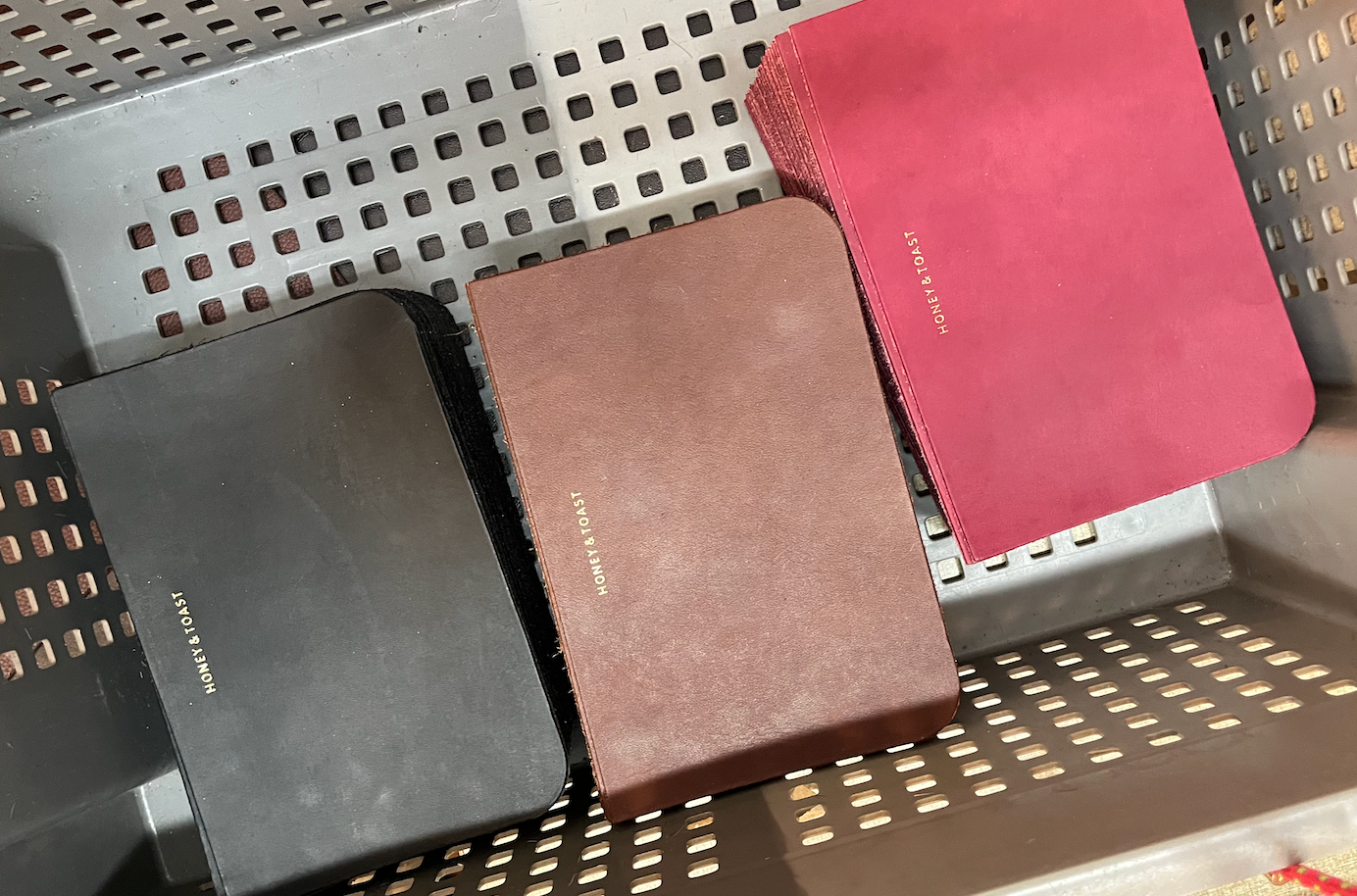
Every Honey & Toast bag is designed in London and made by hand in our workshop in Frome, Somerset, a part of the country with a long history in leatherwork and tanning. This isn't a marketing flourish. It's a genuine, hands-on process, and one worth explaining, because it's exactly why our bags look and feel the way they do.
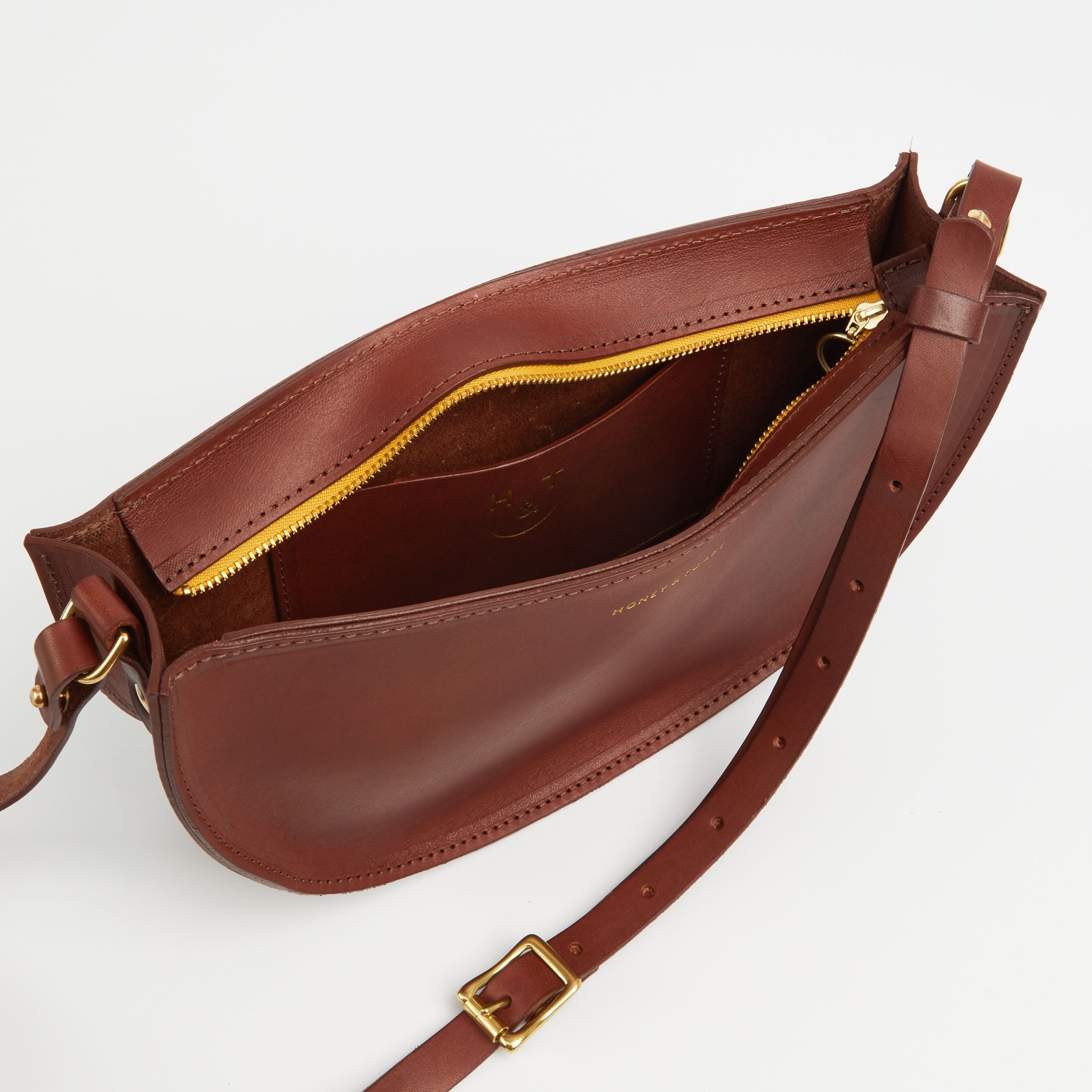
Each panel is cut individually, using traditional metal knives not unlike oversized biscuit cutters, pressed by hand through the leather hide. No two hides are identical, so no two cutting runs are either; a skilled maker has to read the leather, working around natural marks and grain rather than ignoring them. The edges are then hand-dyed and finished, a slow, careful step that gives Honey & Toast bags their distinctive, clean edge finish, something you simply can't replicate on a machine-stitched, mass-produced bag.
Every stitch is placed by hand or guided by hand through the machine, not run blind through an automated line. It takes time. It's meant to.
Why We Make in Small Batches
We don't produce Honey & Toast bags by the thousand. We make them in small batches, which means every single piece that leaves our workshop has actually been looked at, checked, and handled by someone who knows what a well-made bag should feel like.
Small batch production isn't just about exclusivity, it's about quality control. When a maker is producing 30 bags rather than 3,000, they catch the imperfect stitch, the uneven edge, the panel that doesn't sit quite right. Mistakes don't slip through simply because no one had time to look. It also means we're not sitting on huge stockpiles of unsold bags at the end of a season, which is one of the fashion industry's secretive, uglier problems: overproduction and a huge amount of waste.
There's also something really nice about knowing your bag wasn't one of ten thousand identical pieces. It was one of a much smaller run, cut from a hide that had its own character, made by a person who does this for a living because they're good at it.
This is also, quite simply, the only way to keep a small, independent British handbag brand honest. When you're not answering to a factory minimum order quantity or a supply chain built for speed, you get to make decisions based on quality rather than volume. If a batch of leather isn't quite right, we can say no to it. If a stitch line isn't sitting properly, it gets redone rather than shipped anyway. That's a luxury that scale simply doesn't allow, and it's exactly why small, independent brands tend to build such loyal followings: customers can feel the difference.
The Sustainability Case
Producing in the UK rather than shipping components and finished goods across multiple countries cuts down the carbon footprint of every bag considerably. Our leathers are sourced from tanneries that meet strict European environmental and ethical standards, and many of our styles use vegetable-tanned leather, a slower, plant-based tanning process that avoids the heavy chemical run-off associated with some mass-market tanning methods.
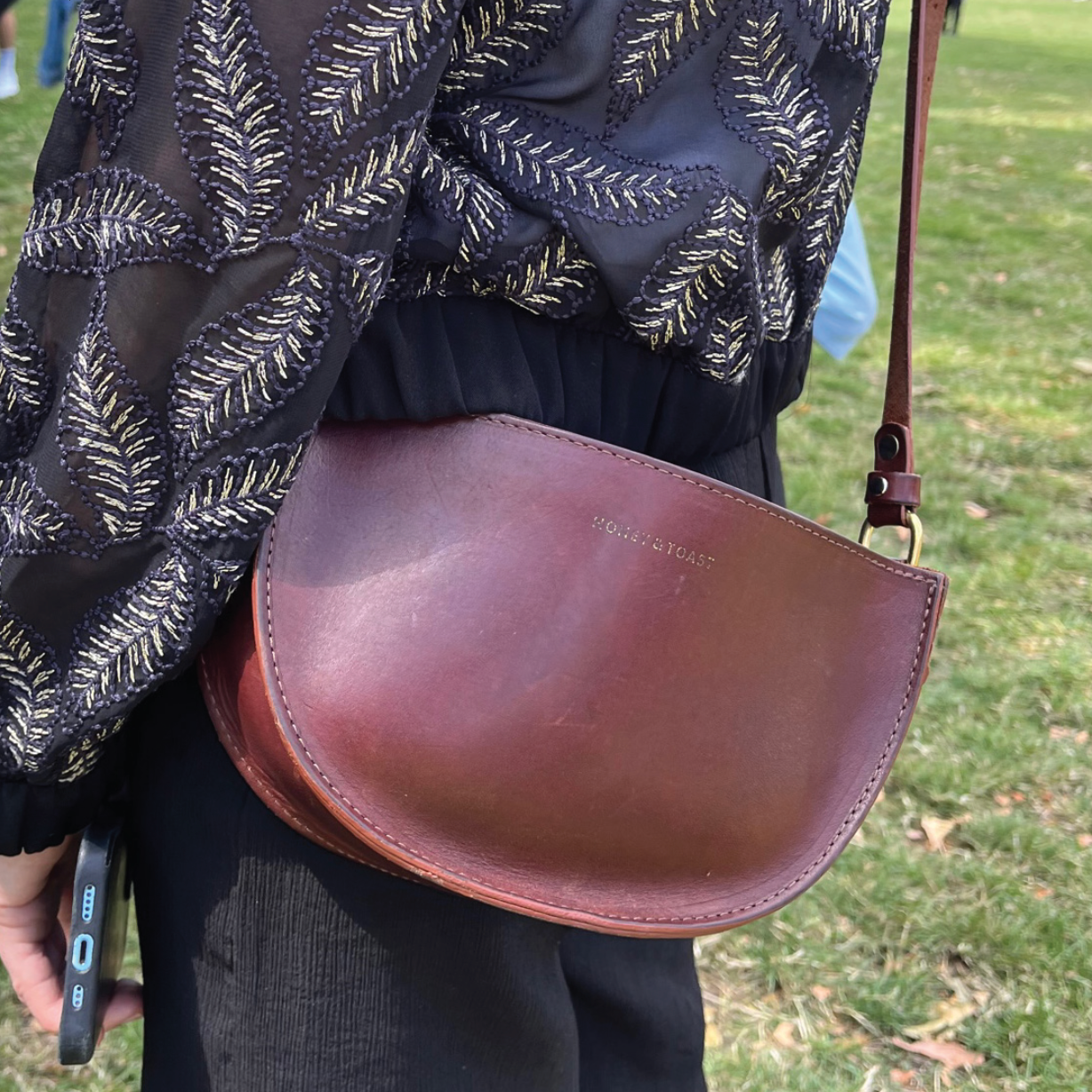
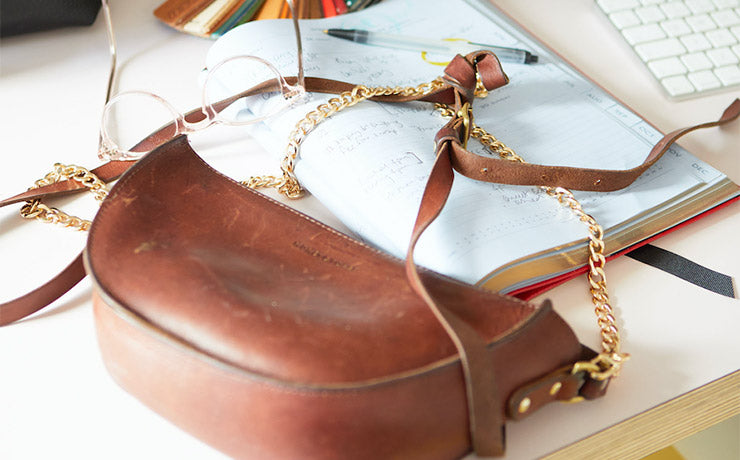
Vegetable-tanned leather also ages properly, developing a natural patina over years of use rather than cracking or peeling. This is the entire point. A bag that looks better after five years of use than it did on day one is a bag that never needed replacing in the first place, which is the single most sustainable thing a bag can do.
It's worth saying: the most sustainable bag isn't necessarily the one made from the most eco-friendly material on paper. It's the one you actually keep and use, year after year, rather than the one that ends up at the back of a wardrobe, or worse, in landfill, after a single season. Longevity is the side of sustainability that doesn't always get talked about, but it matters more than almost anything else. A bag you love and use for a decade will always have a smaller footprint than five "eco" bags bought and discarded over the same period.
The Result: A Bag, Not a Trend
None of this is about chasing what's fashionable this season. It's about making something that still looks right in five, ten, fifteen years, because it was never trying to be trendy to begin with. A well-made leather bag doesn't go out of style the way a synthetic, of-the-moment shape does. Classic silhouettes, honest materials, and proper construction age well because they were never dependent on being "of the moment."
That's the difference between buying a bag and investing in one. A fast fashion bag asks very little of you upfront and costs you much more more over time, in replacements, in landfill, in the low-level irritation of a strap that never quite sat right. A handcrafted leather bag asks a little more of you at the point of purchase, and then gives back for years: in the way it wears in rather than out, in the compliments on a colour that's actually deepened with use, in simply not having to think about replacing it.
British craftsmanship matters because it's slower, by design. It matters because someone's hands were on every part of the process, not just the final polish for a photograph. It matters because a bag made properly, once, is worth more than three bags made quickly, badly, and without love.
If you're looking for a bag built to be part of your everyday life for years rather than one more thing to replace next spring, that's exactly what we've spent years building at Honey & Toast, one hide, one hand-cut panel, one careful stitch at a time.