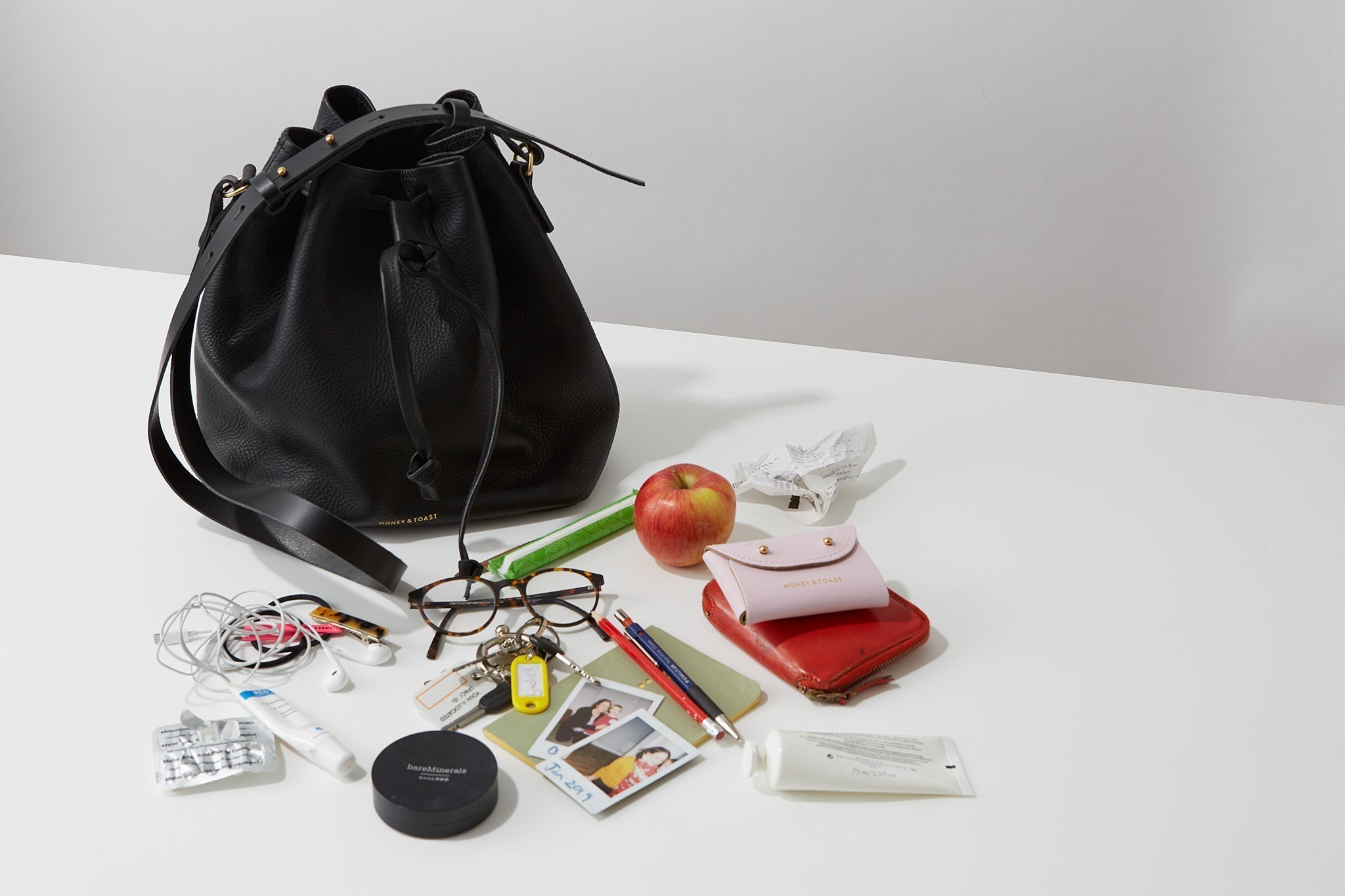
Bag in Focus: The Anna Bucket bag
The world of fashion is often a whirlwind of 'here today, gone tomorrow' trends. We’ve seen the rise of micro-mini bags that can’t fit a credit card and oversized clutches that require two hands to carry. But amidst the noise, a few silhouettes remain quietly and confidently a constant.
Among these icons, the Bucket Bag is one. It is a shape that manages to be both whimsical and utilitarian, structured yet soft. It is a silhouette that feels just as at home in a 1930s champagne cellar as it does on a 2026 fashion week runway.
If you are looking for an accessory that balances history, personality, and practicality, the bucket bag is your ultimate evergreen investment. Here is everything you need to know about this enduring classic.
A Toast to History: The Champagne Origins
The most fascinating aspect of the bucket bag is that it wasn’t originally designed to be a 'handbag' at all. Like many of the best designs in history - from the trench coat to the aviator sunglass - it was born out of a specific and functional necessity.
In 1932, a champagne producer approached Gaston-Louis Vuitton (the grandson of the luxury leather goods brands founder). The producer had a very niche problem: he needed a way to transport five bottles of champagne simultaneously without them breaking. He wanted something sturdy, elegant, and practical.
Vuitton’s solution was the Noé. Named after Noah (of the Ark), who was famously fond of wine, the bag featured a reinforced rectangular base and a sturdy drawstring closure. The design allowed for four bottles to stand upright at the base, with a fifth bottle tucked upside down in the middle to create a secure, interlocking fit.
While the Noé was a triumph of industrial design for wine merchants, it didn't take long for the stylish women of Paris to realize that a bag designed to hold five bottles of bubbly was also the perfect shape for carrying their daily essentials. By the mid-20th century, the 'champagne bag' had officially transitioned into a high-fashion staple.
The Brands That Made It Iconic
While Louis Vuitton gave the bucket bag its start, several other brands have taken the baton, ensuring the shape evolved to meet the aesthetic of every era.
1. Louis Vuitton: The Noé
You cannot discuss the bucket bag without starting at the source. The Noé remains in production today, offered in the classic Monogram canvas and many others luxurious and exotic leathers. It remains the inspiration for every bucket bag following.
2. Coach: The 1960s Revolution
In the 1960s, legendary designer Bonnie Cashin revolutionised the American leather goods brand Coach. She took the bucket silhouette and stripped away the European formality, creating the 'Duffel Sac.' With thick, glove-soft leather and heavy brass fittings, Cashin made the bucket bag the accessory of the 'cool girl'. This new bucket bag version was rugged, durable, and became a quintessential American classic.
3. Mansur Gavriel: The Minimalist Revival
Fast forward to 2013, and the bucket bag experienced a massive global resurgence thanks to Mansur Gavriel. Their minimalist take - featuring smooth vegetable-tanned leather and a simple bow closure—created waitlists that stretched for months. They proved that the bucket bag didn't need logos or heavy hardware to be a status symbol; it just needed perfect dimensions.
4. Fendi and Prada: Modern Luxury
In more recent years, luxury brands such as Fendi and Prada have experimented with scale of the bucket bag. Proving that the bucket bag works just as well as a 'mini' evening accessory as it does as a large daytime 'carry it all' style.
Why the Bucket Bag is an Evergreen Classic
What is the secret to its longevity? Why do we keep coming back to the bucket shape while so many other bags end up at the back of the closet?
1. The Geometry of Space
The bucket bag is a masterclass in spacial efficiency. Most handbags are 'flat' (like a flap bag) or rectangular (like the tote). The bucket bag has a more cylindrical base. Because of this circular or oval base, it creates a volume that holds significantly more than its exterior dimensions suggest. It’s one of the only bag shapes that can comfortably hold a water bottle, make up bag AND all of your essentials without looking too full and overstuffed.
2. A '360-Degree' Design
Most bags have a clear front and back. The bucket bag is quite symmetrical. This gives it a sculptural, architectural quality that looks good from every angle. It acts as a visual anchor for an outfit, providing a soft, rounded contrast to sharper tailored lines of a blazer or a tailored coat.
3. Effortless Accessibility
There is an ease and simplicity to the classic drawstring closure. Unlike a finicky zipper or a stiff metal clasp, the drawstring allows you to expand or contract the bag as needed and adds flexibility. Offering a 'reach-in-and-go' convenience that fits our modern, busy lifestyles so well.
Final Thoughts: A Shape for a Lifetime
The bucket bag is proof that the best designs are often the simplest. It started as a solution for a champagne merchant and evolved into a global fashion icon because it respects the two most important rules of accessories: Being beautiful AND useful. You aren't just buying a bag for the season. You are investing in a silhouette that has already survived nine decades of fashion seasons - and showing no signs of slowing down.
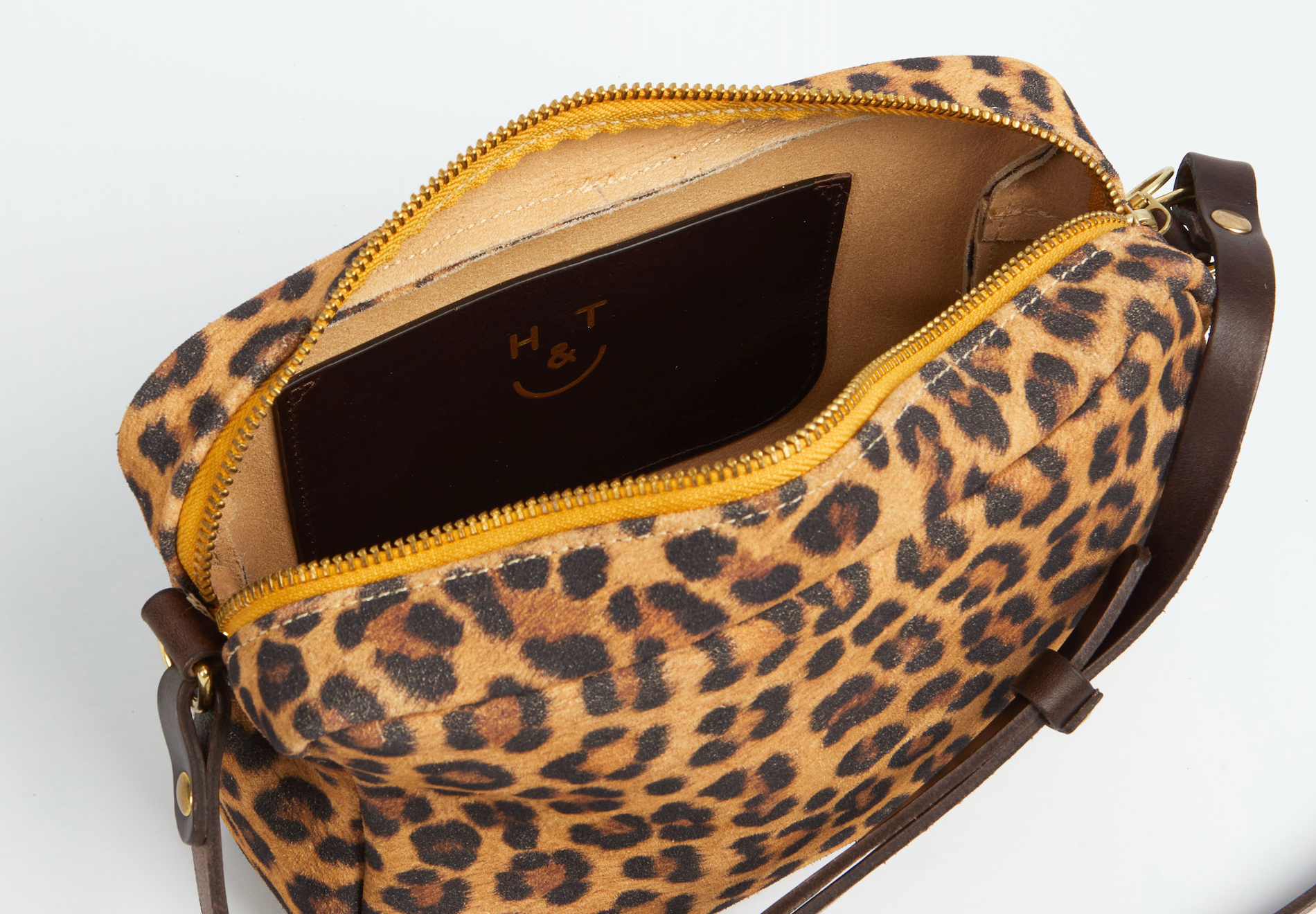
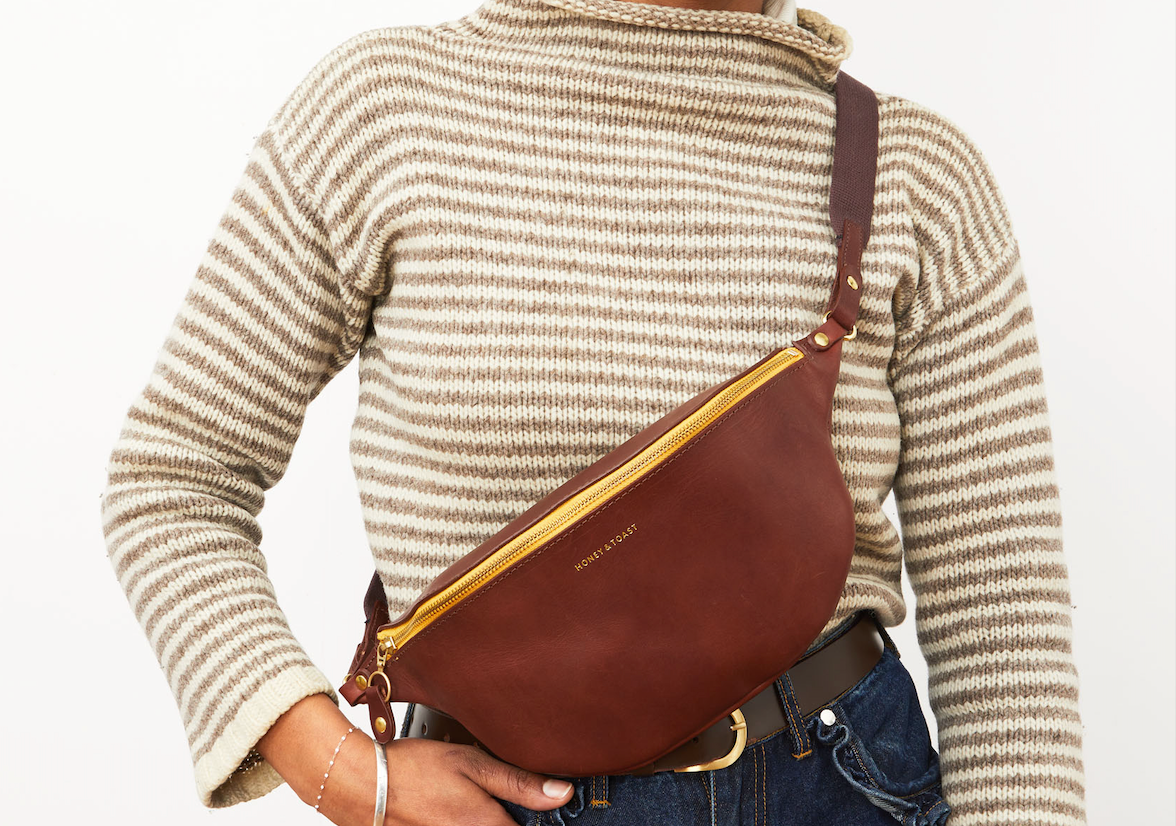
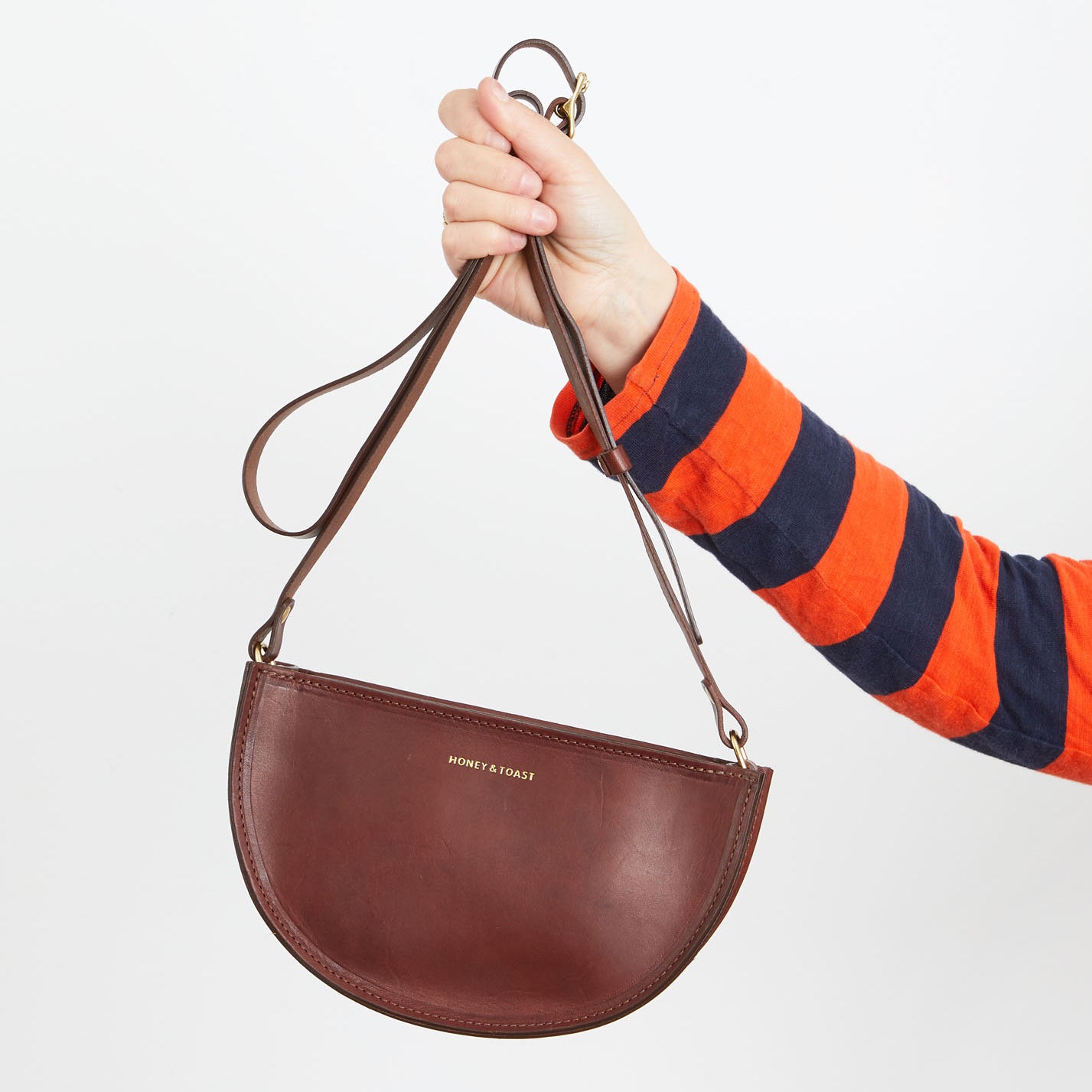
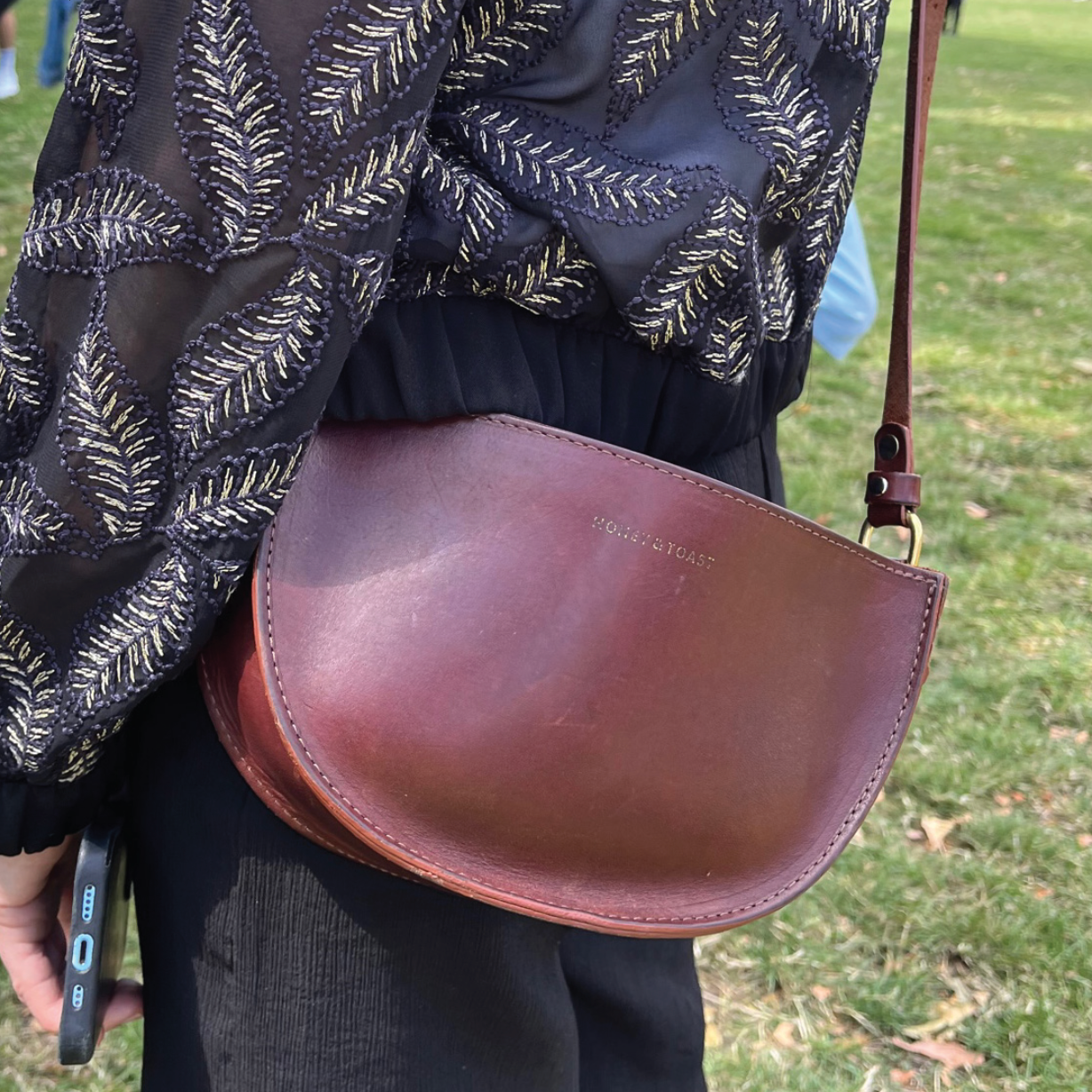
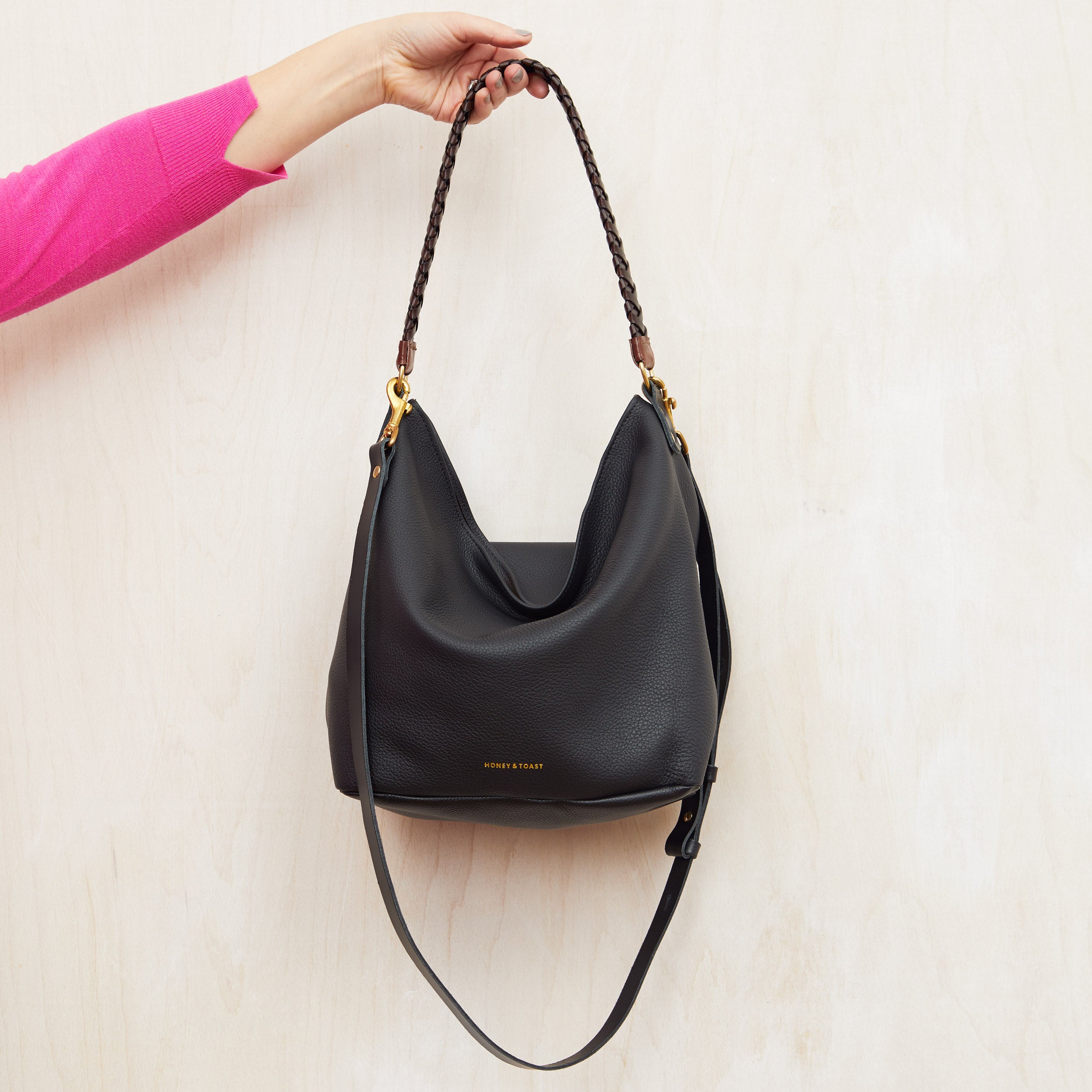
Take a look at the Honey and Toast Anna bucket bag now